2026/01/02
For many years, manually encoding sales felt like a normal part of running a business. Cashiers wrote transactions on paper. Staff transferred those numbers into spreadsheets. Accountants re-entered the same figures into accounting software. Everyone accepted the process, even when it took hours and still produced errors. At the time, it was the best option available.
Today, that reality has completely changed.
Modern businesses move faster, customers expect quicker service, and owners need accurate numbers at all times. Manual sales encoding can no longer support those demands. It slows operations, increases mistakes, and creates gaps between sales activity and financial reporting. That’s why more businesses now rely on integrated systems like EasyPOS and easyFS—tools that don’t just digitize sales, but completely eliminate the need to encode them manually.
The death of manual encoding didn’t happen overnight. It happened because better systems finally arrived!
The Hidden Cost of Manually Encoding Sales
Manual encoding may look harmless on the surface, but it quietly drains time, money, and energy from a business. When sales are recorded manually, employees must perform the same task multiple times: once at the counter, again in a spreadsheet, and once more in an accounting system. Each step increases the risk of error, especially during busy hours or end-of-day reporting.
Mistakes don’t just affect numbers on a page. A missing zero or duplicated entry can distort profit reports, inventory counts, and tax calculations. Managers then make decisions based on inaccurate data, often without realizing it. Over time, these small inconsistencies grow into bigger operational problems.
Even when staff perform manual encoding carefully, the process still delays access to information. Sales entered at the end of the day; or worse, days later—mean owners never see real-time performance. In a competitive environment, delayed information is the same as bad information.
This is exactly the problem modern POS and accounting systems were built to solve.
[easyfs-cta-btn]
EasyPOS: Where Sales Start and Stay Accurate
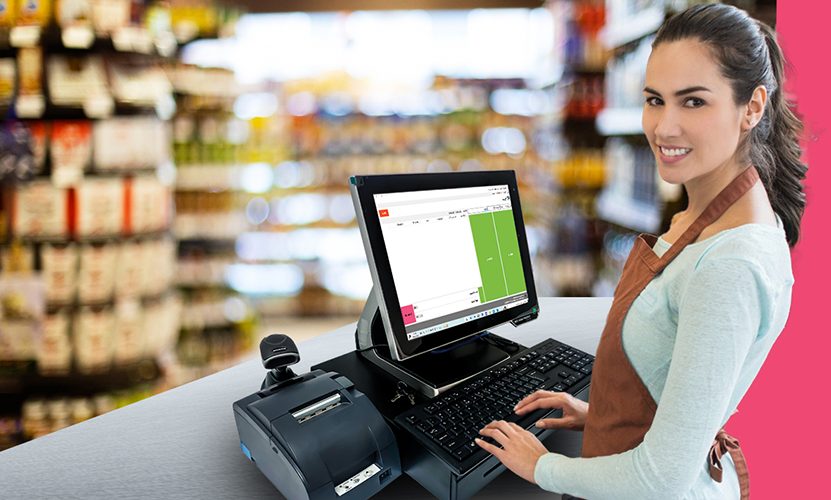
Every business begins with a sale. That moment when a customer pays is where accuracy matters most. EasyPOS takes control of that moment and ensures sales data is captured correctly from the very start.
Instead of writing transactions or memorizing prices, cashiers use an intuitive interface that records each sale instantly. Items, quantities, discounts, and taxes are all applied automatically. The system doesn’t wait for someone to encode the data later because it already captures everything in real time.
This immediate recording dramatically changes daily operations. Cashiers move faster, lines shorten, and customers experience smoother checkouts. At the same time, managers gain confidence knowing that each transaction enters the system exactly as it happens, without relying on memory or handwritten notes.
As sales occur, EasyPOS also updates inventory automatically. When an item sells, stock levels adjust immediately. There’s no need to manually count remaining items or reconcile sales with inventory records at the end of the day. The system always knows what’s available and what needs restocking.
Because EasyPOS is BIR-accredited, it also handles official receipts and compliance requirements correctly. Businesses don’t need separate processes for reporting or documentation. The system already follows regulatory standards, which removes another layer of manual work.
By the time the day ends, sales data is complete, accurate, and ready to use without anyone encoding a single number.
easyFS: Turning Sales Into Financial Clarity
Capturing sales accurately is only part of the equation. Businesses also need those sales to reflect properly in their financial records. This is where many companies still struggle, especially when POS systems operate separately from accounting software.
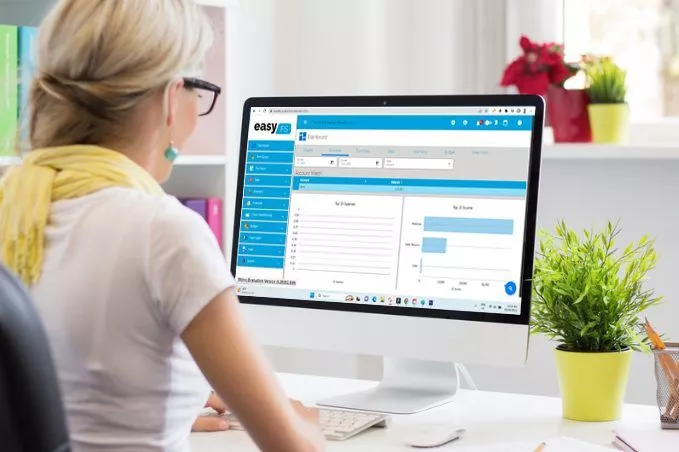
easyFS solves this problem by acting as the financial backbone of the business. It manages ledgers, financial statements, and accounting reports while staying fully connected to EasyPOS. Instead of waiting for sales data to be transferred manually, easyFS receives it automatically.
When a sale happens in EasyPOS, easyFS updates the corresponding accounts instantly. Revenue records change in real time. Cash and receivables adjust automatically. Inventory values align with what is actually sold. There’s no re-entry, no duplication, and no reconciliation headaches later.
This connection means accountants no longer spend time encoding daily sales. Instead, they focus on reviewing data, analyzing performance, and ensuring compliance. Financial reports become living documents rather than outdated summaries created days or weeks later.
For business owners, this integration delivers something even more valuable: visibility. At any moment, they can see accurate profit figures, expenses, and cash flow without waiting for manual updates.
[easyfs-cta-btn]
How Integration Kills Manual Encoding for Good
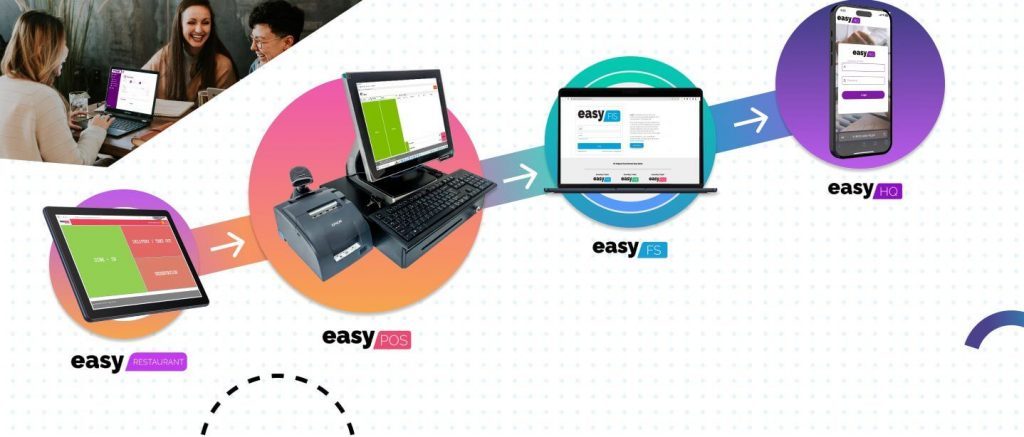
The real power of EasyPOS and easyFS doesn’t come from what they do individually. It comes from how they work together.
In a traditional setup, sales systems and accounting systems live in separate worlds. People act as the bridge between them, manually transferring data and correcting errors. Integration removes that human bottleneck entirely.
Once EasyPOS and easyFS connect, sales flow directly from the cashier’s screen to the accounting records. This process happens automatically, consistently, and instantly. Manual encoding becomes unnecessary because there’s nothing left to encode.
This shift eliminates common problems businesses once considered unavoidable. Encoding errors disappear. Missing transactions stop happening. Reports stay consistent across departments. Everyone; from cashiers to managers to accountants, works with the same numbers.
Decisions also improve dramatically. Instead of guessing based on last month’s data, owners see real-time performance. They can respond quickly to slow days, popular products, or rising costs. Integration turns raw sales data into actionable insight.
What Businesses Actually Experience After Switching
Businesses that move away from manual encoding often notice changes almost immediately. Operations feel lighter. Staff spend less time on repetitive tasks and more time serving customers. End-of-day closing becomes faster because the system already holds complete records.
Inventory accuracy improves because sales and stock levels stay synchronized. Overstocking and understocking happen less often. Purchasing decisions become more precise, reducing waste and missed sales opportunities.
Financial reporting also becomes less stressful. Month-end closing no longer requires chasing missing entries or correcting mismatched figures. Reports reflect reality because the data comes directly from actual transactions.
Perhaps most importantly, business owners regain control. Instead of managing chaos, they manage information. They trust their numbers and use them to grow with confidence.
[easyfs-cta-btn]
From Encoding Work to Real Work
Manual encoding once felt like “real work” because it kept businesses running. In reality, it only maintained the illusion of control. Modern systems expose how inefficient that process truly was.
With EasyPOS and easyFS, work shifts from typing numbers to understanding them. Employees stop acting as data encoders and start acting as problem solvers. Accountants become advisors instead of data entry clerks. Managers become decision-makers instead of detectives hunting for missing figures.
This transition doesn’t just improve efficiency; it changes the culture of the business. Teams feel less overwhelmed, operations feel more organized, and growth feels achievable.
The End of Manual Encoding Is a Good Thing!
Manually encoding sales is dead not because businesses failed, but because technology finally caught up with what businesses actually need. Speed, accuracy, and connection matter more than ever, and outdated processes simply can’t deliver them.
EasyPOS proves that sales don’t need to be written down and re-entered later. easyFS proves that accounting doesn’t need to wait for encoded data to stay accurate. Together, they show that a fully integrated system isn’t a luxury; it’s the new standard.
Businesses that cling to manual encoding hold themselves back. Businesses that embrace integration move forward with clarity, confidence, and control. The future of sales and accounting isn’t manual anymore. It’s connected, automated, and already here.
[easyfs-cta-btn]