


Making Leave Balances Clear for Everyone
When nobody is sure how many leave days are left, questions and disagreements follow. Keep credits, requests and reports in one place. [...]



2026/11/03
Overtime disagreements usually come from unclear approval. Pay overtime only when it was applied for and approved, and let the DTR show it.
Few topics create friction as quickly as overtime. An employee says they stayed late. A supervisor says they never asked. Payroll has to decide, usually after the fact and with incomplete information.
Staying late and working approved overtime are not the same thing. Without a clear process, hours are claimed afterward, approvals are given verbally, and nobody can prove what was agreed. The result is either unhappy employees who were not paid or unplanned costs the company never agreed to.
easyHR ties overtime to an approved request:
Since payroll works from the DTR, what was approved is what flows to pay. There is no separate list to maintain or reconcile.
The value of this approach is not strictness but clarity. Employees know what must happen for overtime to be paid. Supervisors know that approving a request is a decision with consequences. HR can point to the record, not to anyone’s memory.
Imagine a supervisor who often asks the team to stay late for a delivery, usually by chat. At cutoff, three employees claim overtime, but only one chat message mentions it. HR is forced to choose between paying everything and risking cost, or refusing and risking trust.
With overtime applied for and approved in the system, the question answers itself. Approved requests appear in the DTR and are paid; anything else prompts a conversation before the cutoff rather than after payroll. Supervisors also learn to file requests in advance, because that is now how overtime works.
easyHR is cloud-based, so there is nothing to install. Employees and approvers can use it from a browser, and the system is always on the latest version.
Is overtime paid automatically when someone stays late? No. Overtime is paid only when it was applied for and approved.
Where does approved overtime show up? An approved Overtime Application is reflected in the DTR.
Does this connect to payroll? Payroll works from the DTR, so approved overtime flows through with the rest of attendance.
Want to see it in action? Message us for a free demo at humedit.ph/easyhr, or contact Sales: +63 917 628 0355 / hiisales@humedit.ph.

When nobody is sure how many leave days are left, questions and disagreements follow. Keep credits, requests and reports in one place. [...]
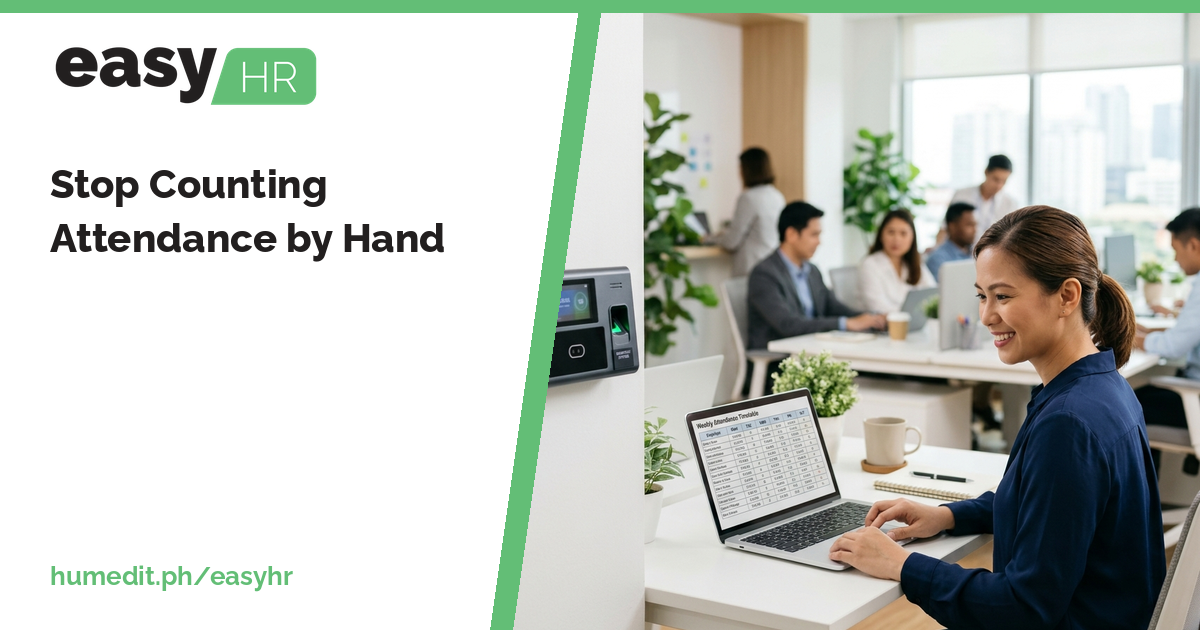
Counting lates, undertime and absences from a log printout is slow and easy to get wrong. Import the logs and let the DTR do the counting. [...]
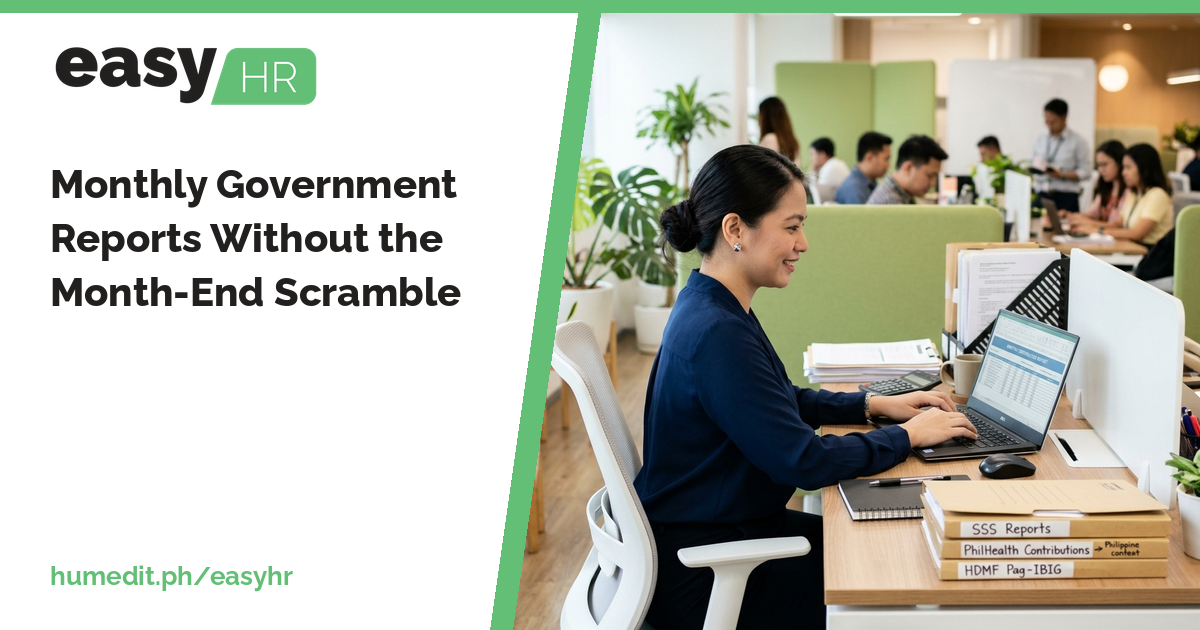
Government reports are due every month, and rebuilding them by hand is slow. Here is how finalized payroll can feed them directly. [...]
Read More... from Monthly Government Reports Without the Month-End Scramble
 AI Chat